


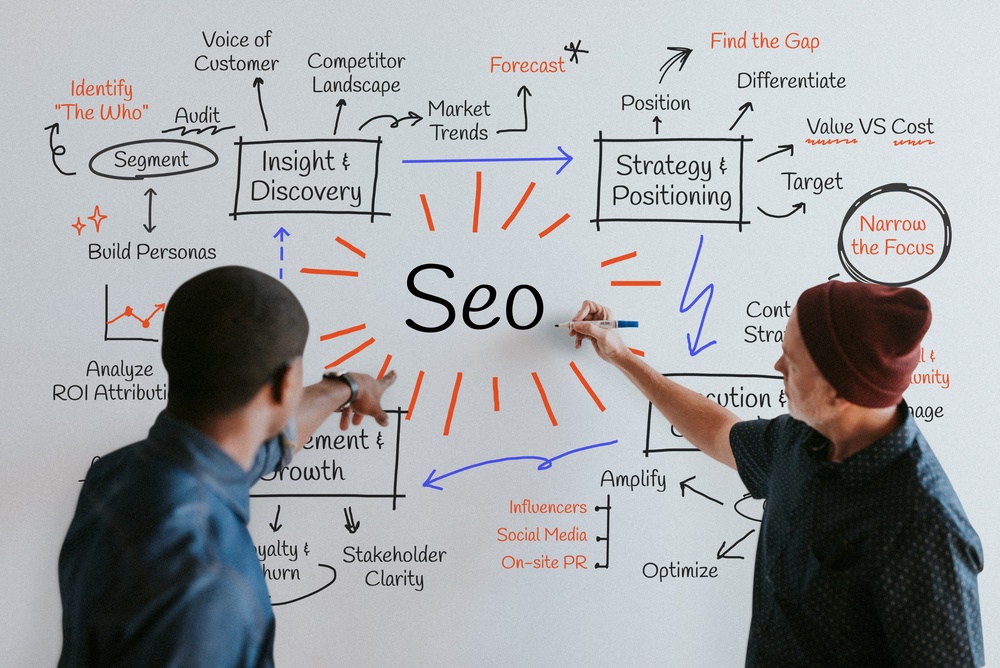
SEO Strategy: How to Build a Winning SEO Plan That Drives Traffic, Leads, and Revenue
A successful SEO strategy does more than improve your website’s position in Google. It connects your business with potential customers, builds credibility in your industry, and creates a consistent source of qualified traffic that can generate leads and sales for years. Yet many businesses approach search engine optimization without a clear plan. They publish blog posts, target popular keywords, and make occasional website updates, hoping their rankings will improve. Some see temporary gains, but few achieve sustainable growth without understanding how these activities work together. An effective SEO strategy requires research, technical expertise, competitive analysis, high-quality content, and ongoing performance measurement. Every decision should support a larger business objective, whether that’s increasing online sales, generating local service inquiries, or establishing authority within a competitive industry. At Richard Hale Media, we approach SEO as a long-term business investment rather than a collection of isolated marketing tactics. Founded by Richard Hale, an SEO expert with 16 years of experience, our agency helps businesses develop comprehensive digital marketing strategies designed to attract the right audience and turn website visitors into customers. Understanding how to build and execute an SEO plan is the first step toward creating measurable, lasting results. What Is an SEO Strategy? An SEO strategy is a structured plan for improving a website’s visibility in organic search results to attract relevant visitors and achieve specific business goals. It combines keyword research, technical SEO, content development, on-page optimization, link building, and performance analysis. Unlike individual SEO tactics, which address specific problems, a strategy establishes priorities and explains how different optimization efforts contribute to business growth. For example, a local HVAC company might develop an SEO strategy focused on ranking for air conditioning repair, furnace installation, and emergency heating services within its service area. An e-commerce business selling furniture would need a different approach, emphasizing product categories, collection pages, informational content, and transactional search terms. Both businesses want more organic traffic, but the audiences, competitive environments, and conversion opportunities differ. A well-developed search engine optimization strategy accounts for these differences before resources are committed. SEO Strategy vs. SEO Tactics Although the terms are often used interchangeably, strategy and tactics serve different purposes. An SEO strategy defines what a business wants to accomplish and why certain activities deserve priority. SEO tactics are the individual actions used to execute that plan. Consider a company that wants to increase qualified leads from organic search by 30% over the next year. Its strategy might involve expanding visibility for high-intent service keywords, improving existing landing pages, and strengthening topical authority. Supporting tactics could include: Each tactic contributes to the broader objective. Without that connection, SEO activities can consume time and money without producing meaningful business results. Why Every Business Needs a Comprehensive SEO Strategy Search engines are often the starting point for purchasing decisions. People search for products, compare service providers, investigate problems, and evaluate companies before making contact. Businesses that appear prominently during these searches have an opportunity to reach customers at precisely the moment they’re looking for information or solutions. However, organic visibility rarely happens by accident in competitive markets. A comprehensive SEO strategy helps businesses identify valuable opportunities, allocate resources effectively, and build an online presence that becomes more competitive over time. Increase Qualified Organic Website Traffic More website traffic isn’t necessarily better traffic. A business might attract thousands of visitors through informational keywords that have little relationship to its services. Those visitors may increase traffic reports without generating additional revenue. Strategic SEO focuses on attracting users whose needs align with what the business provides. For instance, a commercial roofing contractor would generally benefit more from ranking for “commercial roof replacement cost” than from a broad informational search such as “history of roofing materials.” The first query suggests a potential purchasing decision. The second may attract readers with no immediate commercial interest. Both keywords can have value, but their roles within the SEO strategy should be different. Generate More Leads and Sales Search engine optimization becomes significantly more valuable when it supports measurable conversions. Depending on the business, those conversions may include appointment requests, phone calls, contact form submissions, product purchases, quote requests, or newsletter registrations. A conversion-focused SEO strategy considers the entire customer journey, not simply where a website ranks. The landing page must answer the visitor’s questions, establish credibility, communicate the value of the service, and make the next step easy. Build Long-Term Brand Authority Consistently publishing useful, accurate content helps a business become a recognizable source of information within its industry. Great content can build a great brand. When that content is supported by technical optimization, relevant links, and a strong website structure, it can contribute to greater organic visibility. Authority develops through demonstrated expertise, not simply the number of articles published. A website with 30 thoroughly researched, interconnected resources may serve its audience better than one containing hundreds of shallow posts covering loosely related topics. Reduce Dependence on Paid Advertising Paid advertising can generate immediate visibility, but traffic typically declines when campaigns stop running. Organic search operates differently. A well-optimized page can continue attracting visitors without requiring payment for every click. SEO still requires ongoing investment in content, website maintenance, analysis, and optimization. Rankings can also change as competitors improve and search systems evolve. Nevertheless, a strong organic search presence can diversify customer acquisition and reduce reliance on a single advertising channel. How to Build an Effective SEO Strategy Creating an SEO strategy begins with understanding where a business currently stands, what its customers search for, and which opportunities are most likely to generate meaningful returns. The following process provides a practical framework for developing an SEO plan that supports sustainable growth. […]
Read More
H1 Tags and Heading Structure for SEO: The Complete Guide to Better Rankings and User Experience
When people think about search engine optimization, they often focus on keywords, backlinks, or page speed. While those elements certainly matter, one of the most overlooked ranking factors is how a page is organized. Strong heading structure helps search engines understand your content while making it easier for visitors to find the information they need. […]
Read More
What Is a Search Engine? Guide to How Search Engines Work and Why They Matter
Search engines have become part of everyday life. Whether you’re looking for a nearby restaurant, researching a medical condition, comparing products, or finding answers to complex questions, a search engine is often the first place you turn. But have you ever stopped to ask, what is a search engine, and how does it actually work? […]
Read More
Technical SEO: The Foundation Behind Rankings Most Businesses Overlook
Most SEO conversations focus on content, keywords, and backlinks. And to be clear—those matter. But if your technical SEO isn’t dialed in, none of it performs the way it should. You can publish the best content in your industry and still struggle to rank simply because Google can’t properly crawl, interpret, or trust your site. […]
Read More
How Google’s Algorithm Really Works: A Simple Breakdown With the Strategy Most Businesses Miss
If you’ve ever wondered why one page ranks and another doesn’t—even when both look “optimized”—you’re asking the right question. Because Google’s algorithm isn’t just scanning for keywords anymore. It’s evaluating whether your content actually deserves to rank based on how well it satisfies the search. That shift is where most businesses fall behind. At Richard […]
Read More
What Is SEO And How Does It Work? The Real System Behind Rankings (Not Just Keywords)
Most businesses think SEO is about ranking for keywords. That’s part of it—but it’s not what actually drives results anymore. SEO today is about alignment: aligning your content with what people are searching for, how Google interprets that intent, and how your site proves it deserves to rank over everything else on page one. At […]
Read More
What Is Search Intent? The Ranking Factor Most Businesses Still Get Wrong
If you’ve been doing SEO long enough, you’ve probably heard some version of this advice: “target the right keywords and you’ll rank.” That used to work. Today, it doesn’t — at least not on its own. Search intent is what actually controls rankings now. It’s the difference between a page that sits on page 3 […]
Read More