



Google’s search results have changed dramatically over the years. Ranking on the first page is still important, but where your website appears and how Google presents your content can make a significant difference in organic visibility, website traffic, and lead generation.
One of the most valuable opportunities in search engine optimization (SEO) is earning featured snippets.
Featured snippets display information from a webpage directly within Google’s search results, often above traditional organic listings. They provide concise answers to search queries, helping users find relevant information without having to visit multiple websites.
For businesses, appearing in a Google featured snippet can increase brand exposure, establish credibility, and attract qualified visitors. However, earning these prominent placements requires more than simply including keywords in your content.
Understanding how featured snippets work, what Google looks for, and how to structure your website’s content can help you compete for some of the most visible positions in organic search.
What Are Featured Snippets?
Featured snippets are special search results that display an excerpt of content from a webpage to answer a user’s search query. Google automatically selects this information from pages it has indexed and presents it in a prominent format.
A featured snippet typically includes an answer extracted from the webpage, along with a link to the source. Depending on the search query, Google may display the information as a paragraph, numbered list, bulleted list, table, or another supported format.
For example, someone searching for “What is search engine optimization?” might see a short definition at the top of Google’s organic search results.
Instead of displaying only a traditional blue link and meta description, Google may feature a relevant passage explaining SEO.
This placement is commonly associated with position zero, a term used to describe search results appearing above the standard organic listings.
Although position zero remains a familiar SEO expression, featured snippets do not always appear in exactly the same location. Their placement can vary depending on the query, search features, device, and Google’s results layout.
Why Does Google Display Featured Snippets?
Google’s primary objective is to help searchers find useful, relevant information.
When a query can be answered effectively with a short passage, list, or table, Google may display that information directly within the search results.
Featured snippets are especially common for informational searches, including questions beginning with:
- What is
- How does
- How to
- Why does
- When should
- What are the benefits of
- What is the difference between
For instance, a homeowner searching for “How often should you replace an HVAC filter?” may receive a featured snippet explaining recommended replacement intervals.
The user gets an immediate answer while still having the option to visit the website for more detailed information.
This creates an opportunity for businesses that publish authoritative, well-organized educational content.
Why Are Featured Snippets Important for SEO?
Featured snippets can influence how potential customers discover and interact with your business.
Traditional SEO focuses heavily on improving keyword rankings, organic traffic, and conversions. Featured snippet optimization adds another dimension by improving how your content appears within search engine results pages (SERPs).
Increased Visibility in Google Search Results
Featured snippets often occupy substantial space near the top of Google’s search results.
This prominent placement can make your content more noticeable than competing organic listings, particularly on mobile devices where screen space is limited.
A website ranking several positions below the top organic result may gain additional exposure if Google selects its content for a featured snippet.
However, visibility does not automatically translate into additional website visits.
Some searchers find the information they need directly in the snippet and never click through.
For this reason, businesses should evaluate featured snippet performance using impressions, clicks, click-through rates, and conversions rather than rankings alone.
Greater Brand Recognition and Authority
When Google prominently displays information from your website, searchers are more likely to encounter your brand.
Repeated exposure to helpful, accurate information can improve brand familiarity and reinforce your business’s reputation as a knowledgeable resource.
Consider an electrical contractor whose website provides detailed explanations about circuit breakers, electrical panels, and home wiring.
If Google frequently features that contractor’s content in relevant search results, potential customers may become familiar with the company before they need professional electrical services.
That familiarity can support future purchasing decisions.
Opportunities to Attract Qualified Organic Traffic
Not every featured snippet generates substantial traffic. Some answers satisfy search intent completely within Google.
However, snippets addressing more complicated questions may encourage users to click for additional information.
A search for “How much does it cost to replace an electrical panel?” illustrates this distinction.
A short answer might provide an estimated price range, but homeowners often need additional details about labor, permits, panel capacity, and factors affecting installation costs.
A comprehensive article addressing these considerations gives readers a reason to visit the website.
The most effective featured snippet strategies balance immediate answers with valuable supporting information.
Competitive Advantages in Organic Search
Featured snippets create opportunities to compete beyond traditional organic rankings.
A smaller business with highly relevant, well-structured content may earn a featured snippet even when larger competitors have stronger overall domain authority.
Google does not award featured snippets based solely on company size, backlink volume, or domain reputation.
Instead, its systems evaluate whether a webpage contains information that can effectively answer the searcher’s question.
Strong technical SEO, useful content, and established topical relevance can improve a website’s ability to compete for these placements.
What Are the Different Types of Featured Snippets?
Google displays featured snippets in several formats. Understanding these formats helps you organize content around the type of information searchers expect.
Paragraph Featured Snippets
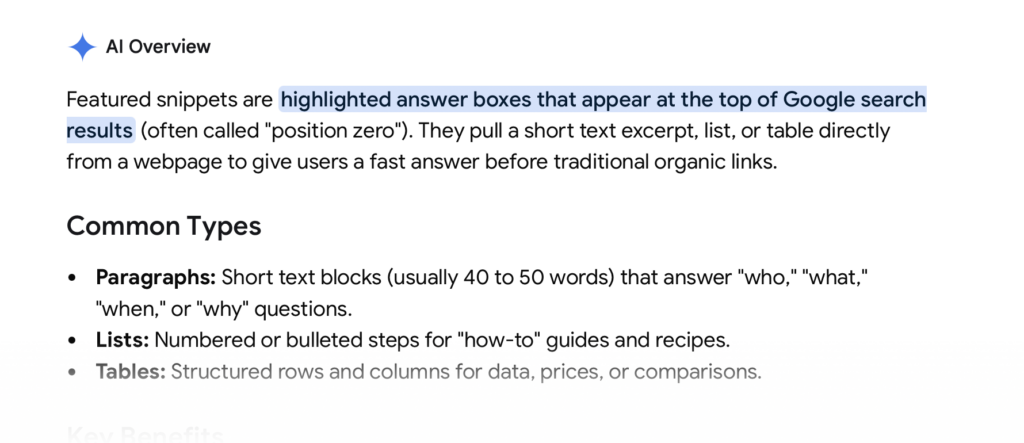
Paragraph snippets provide a concise written answer to a search query.
They frequently appear for definitions, explanations, and questions requiring a short description.
For example, a search for “What is local SEO?” might display a paragraph explaining how local search optimization helps businesses improve their visibility in geographically relevant search results.
Paragraph snippets are particularly useful for topics involving terminology, concepts, benefits, and processes.
To optimize for paragraph featured snippets, provide a direct answer immediately after a relevant heading.
A clear response of approximately 40 to 60 words can be a practical starting point, although Google does not require a specific word count.
Accuracy, clarity, and relevance matter more than meeting an arbitrary length.
Numbered List Featured Snippets
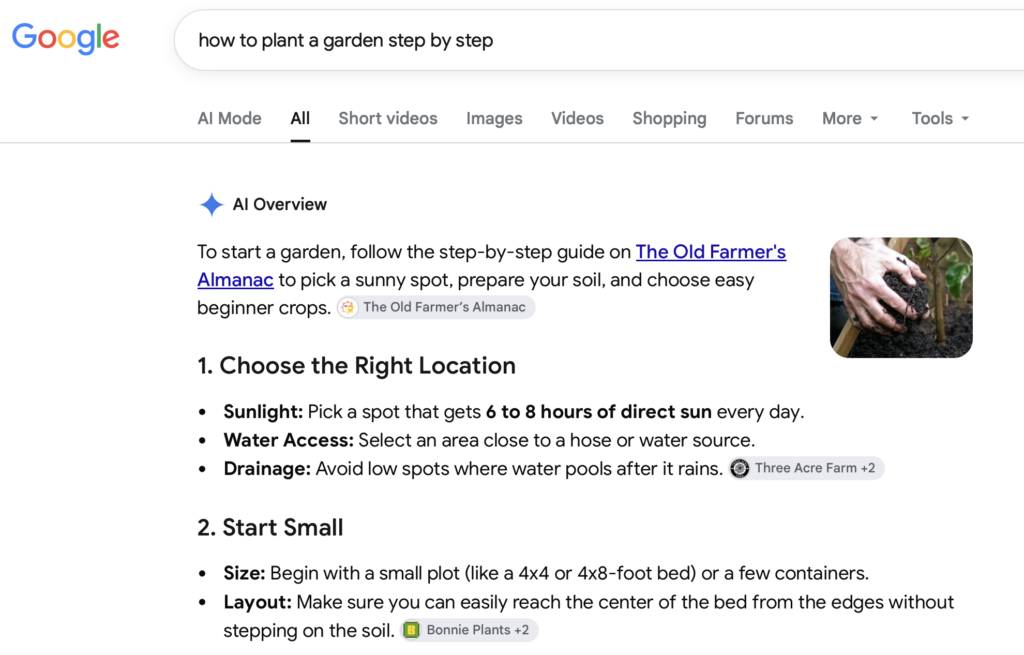
Numbered list snippets are commonly displayed when a search query involves a sequence of steps.
They are especially relevant for instructional searches such as “How to optimize a website for SEO” or “How to install a ceiling fan.”
Google may extract numbered steps from a webpage and present them directly in the search results.
For example, a numbered list explaining how to improve website speed could include:
- Evaluate current page loading performance.
- Compress and properly size images.
- Reduce unnecessary JavaScript.
- Enable appropriate browser caching.
- Improve server response times.
- Test performance after making changes.
Content that follows a logical sequence and uses descriptive headings is easier for readers to understand and can be suitable for this snippet format.
Bulleted List Featured Snippets
Bulleted list snippets organize information that does not need to follow a specific order.
They frequently appear for searches involving examples, benefits, characteristics, or comparisons.
A query such as “What are the benefits of content marketing?” might produce a list covering increased brand awareness, organic visibility, audience engagement, and lead generation.
When creating content for these queries, organize related information into meaningful bullet points.
Avoid creating excessively long lists simply to influence search results. Each item should provide distinct value.
Table Featured Snippets
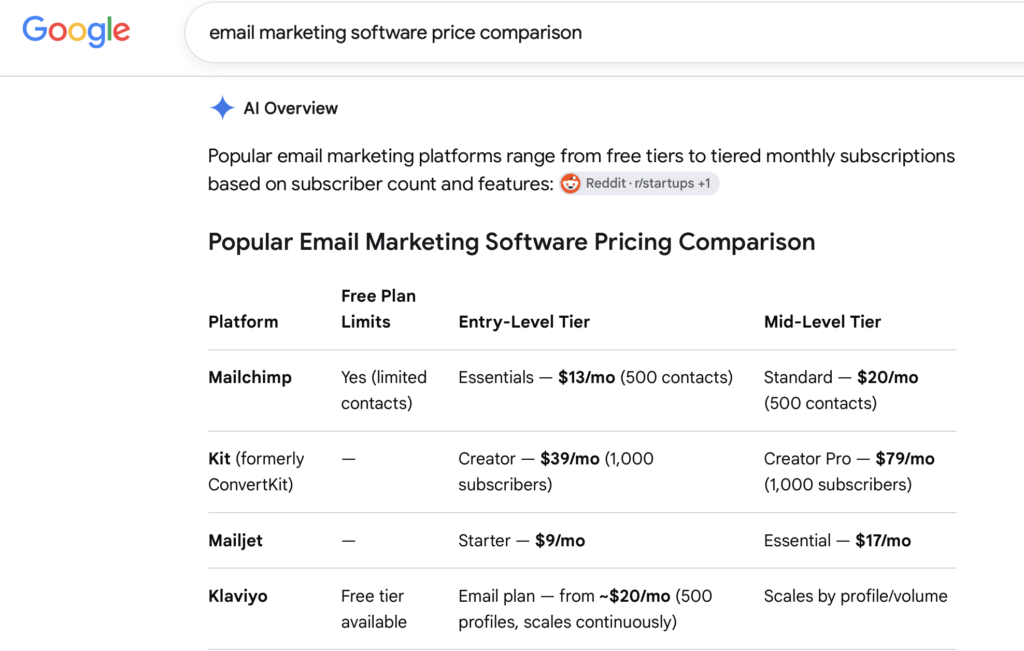
Table snippets display structured information in rows and columns.
They are useful for search queries involving comparisons, specifications, measurements, and pricing.
A webpage comparing SEO and PPC advertising, for example, might include the following table:
| Feature | SEO | PPC Advertising |
| Traffic source | Organic search results | Paid advertisements |
| Direct cost per click | No advertising charge per organic click | Advertiser pays for clicks |
| Time to gain visibility | Often gradual | Potentially immediate after launch |
| Long-term value | Can compound over time | Depends on continued advertising |
| Primary focus | Organic relevance and visibility | Paid placement and conversions |
Clear table headings and accurate comparisons make the information more useful to visitors.
They also provide Google with an organized structure that may be appropriate for certain featured snippet queries.
How Does Google Choose Featured Snippets?
Google uses automated systems to determine whether a webpage contains information suitable for a featured snippet.
There is no application process, special submission form, or guaranteed method for earning one.
Google evaluates search intent and the relevance of available content, then determines whether displaying a featured answer would help users.
Several factors influence how effectively your content addresses potential snippet opportunities.
Search Intent and Query Relevance
Search intent describes what someone wants to accomplish when entering a query into a search engine.
For featured snippets, informational intent is particularly important.
Someone searching for “What is technical SEO?” likely wants a definition or explanation.
A page that immediately explains technical SEO has a more suitable answer structure than one that begins with several paragraphs promoting SEO services.
Understanding the searcher’s immediate need should guide how you organize each section.
Clear and Direct Answers
Content should answer questions without forcing readers to search through unrelated information.
Consider the question “What is a featured snippet in SEO?”
A useful answer would be:
A featured snippet is a Google search result that highlights information from a webpage to answer a user’s query. It may appear as a paragraph, list, or table and includes a link to the original source.
That explanation addresses the question immediately.
Additional paragraphs can then explain how snippets work, why they matter, and how to optimize for them.
This approach supports both user experience and search visibility.
Content Quality and Topical Relevance
A webpage should demonstrate a meaningful understanding of its subject.
For example, an article about featured snippets becomes more useful when it explains different snippet formats, search intent, content optimization, performance measurement, and common misconceptions.
Simply repeating the keyword “featured snippets” throughout a page does not establish topical authority.
Strong content connects related concepts naturally and provides information that helps readers make informed decisions.
Page Indexability and Search Eligibility
Google generally selects featured snippets from webpages eligible to appear in its search results.
If a page cannot be crawled or indexed, it cannot compete effectively for organic search features.
Technical issues such as incorrect canonical tags, blocked resources, indexing restrictions, or poor rendering can prevent Google from accessing important content.
A sound technical SEO foundation remains essential.
How to Optimize for Featured Snippets
Earning featured snippets requires a combination of keyword research, content structure, search intent analysis, and ongoing optimization.
The following strategies help make your content more suitable for featured answers while improving its usefulness to readers.
1. Identify Featured Snippet Opportunities
Start by researching keywords that currently trigger featured snippets.
These queries often reveal opportunities where Google has already determined that a direct answer is valuable.
Look for relevant informational searches associated with your products, services, and industry.
For an HVAC company, potential targets might include:
- What is an HVAC system?
- How often should you change an air filter?
- Why is my air conditioner leaking water?
- What causes uneven heating in a house?
- How long does an HVAC system last?
Prioritize keywords that align with your audience’s needs and your business’s expertise.
A keyword with substantial search volume is not necessarily the best opportunity if it attracts visitors who have no interest in your services.
2. Analyze the Existing Featured Snippet
Before changing your content, examine the snippet Google currently displays for your target keyword.
Pay attention to the format, answer length, terminology, and surrounding search results.
Determine whether the existing snippet answers the question completely or leaves important details unexplained.
For example, if the current featured snippet provides a short explanation of roof replacement costs, a roofing company might create a more useful answer that explains the major factors affecting pricing.
The goal is not to copy the competing snippet.
It is to understand what the searcher expects and deliver a clearer, more accurate response.
3. Place Direct Answers Beneath Relevant Headings
One of the most practical featured snippet optimization techniques is placing a concise answer immediately after a descriptive heading.
For example:
How Long Does SEO Take to Work?
SEO typically takes several months to produce meaningful improvements, although timelines vary depending on competition, website history, technical issues, content quality, and the scope of optimization. Some changes can influence search visibility sooner, while competitive keywords may require sustained effort.
This format provides a complete answer before exploring the topic in greater detail.
Readers benefit because they receive useful information immediately.
Google can also identify a clearly defined passage relevant to the search query.
4. Use a Logical Heading Structure
Headings help organize information into meaningful sections.
A well-structured article should use one H1 for the primary page title, followed by H2 headings for major topics and H3 headings for supporting subsections.
For example, an article about local SEO might include an H2 titled “How Does Local SEO Work?” followed by H3 sections discussing Google Business Profiles, local citations, reviews, and location-specific content.
This structure makes complex information easier to navigate.
It also helps search engines understand how different sections relate to the broader subject.
Headings should describe the content accurately rather than repeat keywords unnecessarily.
5. Match the Content Format to Search Intent
The format of your answer should reflect the type of information the searcher needs.
A definition usually works best as a paragraph.
A process may benefit from numbered steps.
A comparison might be easier to understand in a table.
A list of advantages can often be presented as bullet points.
Forcing every answer into the same format can reduce readability and limit its usefulness.
Study the query, evaluate competing results, and select the presentation that communicates the information most effectively.
6. Expand Supporting Content Without Burying the Answer
A concise answer can make a section suitable for featured snippets, but the rest of the page should provide meaningful depth.
For example, an article explaining the cost of SEO services might begin with a short overview of pricing.
It should then explore factors such as campaign scope, competition, technical requirements, content development, local versus national targeting, and ongoing optimization.
This additional context gives readers a reason to continue exploring the page.
It also supports the website’s broader topical authority.
7. Strengthen Internal Linking
Internal links connect related pages and help search engines discover additional content.
A comprehensive featured snippets article might link to supporting resources about keyword research, technical SEO, on-page optimization, and search intent.
These connections help establish relationships between topics.
They also encourage readers to explore related information.
Use descriptive anchor text that accurately reflects the destination page.
Avoid excessive linking or adding links that do not provide meaningful value.
8. Improve Technical SEO and User Experience
Technical SEO performance does not guarantee featured snippet eligibility, but serious website issues can limit organic visibility.
Important considerations include mobile usability, crawlability, indexing, page performance, and content accessibility.
Make sure important answers are available in rendered HTML and are not unnecessarily hidden behind interactions that search engines may struggle to process.
A responsive layout, readable typography, and intuitive navigation also improve the experience for visitors who click through from search results.
9. Keep Information Accurate and Updated
Featured snippets can change as Google reevaluates search results and discovers new content.
Pages containing outdated statistics, obsolete instructions, or inaccurate information may become less useful over time.
Review important articles periodically.
Update information when industry practices, regulations, products, or search behavior change.
For example, a guide discussing Google’s search features should distinguish between traditional featured snippets and newer search experiences rather than treating every prominent result as the same feature.
Accuracy supports long-term content quality.
How to Find Featured Snippet Keywords
Keyword research for featured snippets requires more than identifying high-volume search terms.
The objective is to find queries where a direct answer is useful, where your website has relevant expertise, and where improvements could produce meaningful business value.
Target Question-Based Keywords
Question keywords are a natural starting point.
Searches beginning with “what,” “why,” “how,” and “when” frequently indicate informational intent.
However, not every question generates a featured snippet.
Google may instead display standard organic results, videos, People Also Ask features, or other search elements.
Always examine the actual search results before prioritizing a keyword.
Look for Keywords Where You Already Rank
Existing organic rankings can provide particularly valuable opportunities.
If your website already ranks prominently for a relevant informational query, improving the clarity and structure of its answer may help it compete for a featured snippet.
Focus first on pages that already demonstrate relevance and receive organic impressions.
These pages may require targeted improvements rather than a complete rewrite.
Analyze Long-Tail Search Queries
Long-tail keywords often describe more specific problems or questions.
For example, “SEO” is broad and highly competitive.
A query such as “How do featured snippets affect organic click-through rates?” expresses a much clearer informational need.
Long-tail keywords can also reveal the questions potential customers ask during the research process.
By answering those questions thoroughly, businesses can attract visitors at different stages of the buying journey.
Use Related Searches to Build Topical Coverage
Google’s related searches and People Also Ask questions can reveal additional subjects worth addressing.
An article about featured snippets might naturally include questions about snippet eligibility, structured data, ranking requirements, and performance measurement.
These related topics should be included when they strengthen the article.
Avoid adding unrelated questions solely to increase keyword coverage.
Featured Snippets vs. Rich Snippets: What’s the Difference?
Featured snippets and rich snippets are frequently confused, but they serve different purposes.
A featured snippet highlights information from a webpage to answer a search query directly.
A rich result enhances a search listing with additional visual or structured information, such as ratings, product details, prices, or other supported features.
| Feature | Featured Snippets | Rich Results |
| Primary purpose | Answer a search query directly | Enhance the presentation of a search result |
| Typical appearance | Paragraph, list, or table | Ratings, product information, and other enhancements |
| Content source | Information selected from a webpage | Often supported by structured data |
| Schema markup required | No | Required for many rich result types |
| Guaranteed appearance | No | No |
| Main SEO opportunity | Prominent informational visibility | More informative search listings |
Both features can contribute to organic search visibility, but they require different optimization considerations.
Featured Snippets vs. People Also Ask
People Also Ask (PAA) is another Google search feature that displays related questions.
Users can expand individual questions to view answers sourced from webpages.
Although People Also Ask answers may resemble featured snippets, the two features are not identical.
A featured snippet typically presents an answer directly within a prominent search result.
People Also Ask displays a collection of expandable questions that users can explore.
Both can create opportunities for websites that publish clear, relevant answers.
However, optimization should focus on satisfying the searcher’s needs rather than treating every question-based search feature as interchangeable.
Featured Snippets and Google AI Overviews
Google’s AI Overviews have introduced additional changes to how information appears in search results.
AI Overviews can synthesize information from multiple sources into a generated response, sometimes accompanied by links to supporting webpages.
Traditional featured snippets generally highlight information selected from a particular webpage.
These are different search features, even though both can answer questions directly within Google.
Can Featured Snippets and AI Overviews Appear Together?
Google may display different combinations of search features depending on the query.
Some searches trigger traditional featured snippets, while others display AI Overviews, standard organic listings, or other results.
The presence and placement of these features can change.
Businesses should avoid assuming that a keyword will always produce the same search layout.
Does Featured Snippet Optimization Help With Answer Engine Optimization?
Featured snippet optimization and answer engine optimization (AEO) share several important principles.
Both benefit from content that answers questions clearly, explains concepts accurately, and demonstrates relevant expertise.
Strong AEO content also considers how information is interpreted, attributed, and presented across answer-oriented search experiences.
For example, a service page that clearly explains what a company does, where it operates, and how its services solve customer problems may be easier for search systems to interpret.
However, earning a featured snippet does not guarantee inclusion in an AI Overview or any other answer engine.
Each system has its own methods for selecting and presenting information.
The strongest approach is to build useful, well-organized content that serves readers regardless of how they discover it.
Do Featured Snippets Increase Organic Traffic?
Featured snippets can increase organic traffic, but the results vary significantly.
Some snippets attract clicks because the searcher needs more information than the short answer provides.
Others reduce clicks by satisfying the query directly within the search results.
This is often described as zero-click search behavior.
Understanding Zero-Click Searches
A zero-click search occurs when someone finds the information they need without visiting another website.
For example, someone searching for a simple measurement conversion may receive the complete answer within Google.
There is little reason to click through.
However, someone researching the best marketing strategy for a small business may need considerably more information before making a decision.
A featured snippet addressing part of that question could encourage the user to explore the full article.
Why Search Intent Matters More Than Snippet Ownership
The value of a featured snippet depends on the business objective behind the keyword.
A snippet that generates thousands of impressions but no meaningful engagement may have limited direct commercial value.
Meanwhile, a lower-volume snippet addressing a specific customer problem could introduce your company to people actively researching a service.
For businesses focused on lead generation, qualified traffic and conversions are often more important than visibility alone.
How to Measure Featured Snippet Performance
Measuring featured snippet performance requires evaluating both search visibility and business outcomes.
A featured snippet should not be considered successful simply because your website appears in a prominent position.
Monitor Organic Search Impressions and Clicks
Google Search Console provides valuable information about search queries, impressions, clicks, click-through rates, and average position.
However, it does not provide a dedicated featured snippet performance report that isolates all featured snippet appearances.
You can use Search Console to evaluate how a page’s organic performance changes over time.
Compare relevant queries before and after major content improvements, while accounting for seasonality and other changes in search results.
Track Featured Snippet Ownership
SEO rank-tracking platforms may identify keywords that trigger featured snippets and report which websites occupy those placements.
This information can help you monitor:
- Keywords where your website owns a featured snippet.
- Relevant snippets currently held by competitors.
- New featured snippet opportunities.
- Snippets your website has gained or lost.
- Changes in organic rankings for targeted queries.
Because search results vary by location, device, and time, rankings should be interpreted within the context of the tracking configuration.
Evaluate Conversions and Lead Quality
Organic traffic is only one component of SEO performance.
For a service-based business, the more meaningful question is whether search visibility contributes to inquiries, appointments, consultations, or sales.
Use website analytics and conversion tracking to evaluate how visitors interact with pages targeting featured snippets.
Look at engagement with service pages, contact form submissions, phone call conversions, and other relevant business actions.
This helps determine whether featured snippet optimization supports measurable marketing objectives.
Common Featured Snippet Optimization Mistakes
Some websites invest heavily in snippet optimization without addressing the factors that make their content genuinely useful.
Several mistakes can limit results.
Writing Long Introductions Before Answering the Question
Visitors searching for a specific answer should not have to read several paragraphs of general background before finding it.
Provide the answer early, then expand with additional context.
This improves usability and makes the relevant passage easier to identify.
Overusing Exact-Match Keywords
Repeating the same keyword in every heading and paragraph does not make content more authoritative.
Search engines understand many related terms and contextual relationships.
Use natural variations such as “Google featured snippets,” “featured snippet optimization,” “position zero,” and “featured answers” when they fit the discussion.
Copying Competitors’ Featured Snippets
Replicating another website’s answer does not establish a competitive advantage.
Instead, evaluate whether you can explain the concept more clearly, provide better examples, or address important information the competing page overlooks.
Original insight and accuracy should guide the content.
Ignoring Search Intent
A detailed article can still perform poorly if it fails to address what the searcher wants.
Someone asking “How to reset a circuit breaker” likely wants practical instructions and safety information.
An article focused primarily on selling electrical panel replacements would not fully satisfy that intent.
Align the content with the question before introducing related commercial services.
Assuming Schema Markup Guarantees Featured Snippets
Structured data helps search engines understand certain types of page information and can support eligibility for specific rich results.
However, there is no dedicated featured snippet schema markup that guarantees a featured snippet.
Adding FAQPage, HowTo, or other schema types does not automatically produce a featured answer.
Google determines featured snippets through its own search systems.
Focusing on Rankings Without Evaluating Results
A prominent search appearance is valuable only when it contributes to meaningful objectives.
Monitor changes in impressions, organic clicks, user behavior, and conversions.
Do not assume every featured snippet is worth pursuing or retaining at any cost.
Can You Control Whether Google Shows Your Content in Featured Snippets?
Website owners cannot directly choose which passages Google displays as featured snippets.
However, Google provides certain controls that can limit how content appears in search previews.
For example, the nosnippet directive prevents Google from displaying a text snippet for a page.
The max-snippet directive can limit the amount of text shown in supported search previews.
The data-nosnippet attribute can exclude specific sections of a page from eligible snippets.
These controls should be used carefully because they can affect other search result presentations, not just featured snippets.
There is no guaranteed snippet-length setting that allows a website to block featured snippets while preserving every other search preview exactly as before.
For most businesses, improving answer quality is a more productive strategy than restricting snippet eligibility.
How Featured Snippets Support a Broader SEO Strategy
Featured snippets should be treated as one component of a comprehensive organic search strategy.
A website needs more than a collection of short answers to build sustainable search visibility.
Successful SEO involves technical performance, content quality, keyword targeting, internal linking, relevant authority signals, and ongoing analysis.
Building Topical Authority Through Content Clusters
A content cluster organizes related information around a central subject.
For example, a digital marketing agency might develop a comprehensive SEO resource supported by individual articles about technical SEO, keyword research, on-page optimization, local SEO, featured snippets, and AEO.
Each article addresses a specific search need while connecting readers to relevant supporting information.
This approach helps create a more complete resource for visitors.
It also establishes clear relationships between topics throughout the website.
Connecting Informational Content to Commercial Services
Featured snippet queries are often informational, but they can still support lead generation.
A person researching “How does local SEO work?” may eventually need help improving their business’s local search visibility.
A useful educational article can introduce that person to a marketing agency’s expertise.
Relevant internal links and natural calls to action can guide interested visitors toward service pages without interrupting the informational experience.
The goal is to help potential customers move from understanding a problem to evaluating a solution.
Supporting Long-Term Organic Visibility
Featured snippets are not permanent.
Google may replace a featured answer, change its format, or stop displaying a snippet for a particular query.
A sustainable strategy should therefore prioritize content that remains valuable even when a featured snippet disappears.
Well-written articles can continue attracting organic traffic, supporting internal links, building brand recognition, and generating leads through traditional search results.
How Richard Hale Media Helps Businesses Improve Search Visibility
Earning featured snippets requires a clear understanding of how search engines interpret content and how customers search for information.
At Richard Hale Media, SEO is approached as part of a broader digital marketing strategy designed to help businesses attract qualified traffic and generate more clients.
Founded by Richard Hale, an SEO expert with 16 years of experience, Richard Hale Media helps businesses improve their online presence through search engine optimization, content marketing, answer engine optimization, and other digital marketing services.
Our approach focuses on identifying valuable search opportunities, improving website content, strengthening topical relevance, and connecting organic visibility to business growth.
If you need help with featured snippets, SEO, or digital marketing, we can help. Give our a team a call: 304-928-3832
SEO and Featured Snippet Optimization
Effective SEO begins with understanding the questions potential customers are asking.
Richard Hale Media helps businesses develop content strategies that address relevant search intent while supporting broader organic rankings.
This includes keyword research, content optimization, on-page SEO, internal linking, and opportunities to compete for featured snippets.
Answer Engine Optimization
Search behavior continues to evolve as Google and other platforms introduce new ways to deliver answers.
Richard Hale Media incorporates answer engine optimization strategies to help businesses create clear, authoritative content suitable for modern search experiences.
The objective is to improve how effectively a business communicates its expertise across traditional and answer-focused search environments.
Content Marketing and Lead Generation
Strong content should do more than attract impressions.
It should help potential customers understand their options, evaluate solutions, and take the next step.
Richard Hale Media combines content marketing with SEO and lead generation strategies to support meaningful business outcomes.
The agency also provides social media marketing and web design services, helping businesses build a consistent digital presence across multiple channels.
Learn more about our digital marketing services at Richard Hale Media.
Frequently Asked Questions About Featured Snippets
What Is a Featured Snippet in Google?
A featured snippet is a special Google search result that displays information from a webpage to answer a search query directly. Featured snippets commonly appear as paragraphs, lists, or tables and include a link to the source website.
How Do You Get Featured Snippets on Google?
To improve your chances of earning featured snippets, target relevant informational keywords, answer questions clearly, organize content with descriptive headings, and provide accurate supporting information. Google automatically selects featured snippets, so no optimization technique can guarantee placement.
Are Featured Snippets Good for SEO?
Featured snippets can benefit SEO by increasing search visibility, strengthening brand recognition, and potentially attracting organic traffic. Their value depends on the search query, user intent, click-through behavior, and whether the resulting exposure supports business objectives.
What Is Position Zero in SEO?
Position zero is an informal SEO term describing a featured snippet that appears above traditional organic search listings. The term remains widely used, although featured snippet placement can vary depending on Google’s search results layout.
Do You Have to Rank Number One to Get a Featured Snippet?
No. A webpage does not have to hold the number-one traditional organic ranking to earn a featured snippet. Google can select a relevant answer from another eligible organic result when its systems determine that the content is suitable.
How Long Does It Take to Get a Featured Snippet?
There is no fixed timeline for earning a featured snippet. Google may select content after crawling and processing a page, but the timing depends on indexing, query relevance, competition, and changes in search results. Some pages never earn featured snippets despite extensive optimization.
What Is the Best Word Count for a Featured Snippet?
There is no official word count required for featured snippets. For paragraph answers, approximately 40 to 60 words can be a useful writing guideline, but shorter or longer passages may appear. The best answer length is the one that explains the subject clearly and completely.
Can a New Website Get Featured Snippets?
Yes. A newer website can potentially earn featured snippets if its content is indexed, relevant, and suitable for the query. However, newer websites may face stronger competition from established sites with extensive content and stronger search visibility.
Does Schema Markup Help You Get Featured Snippets?
Schema markup is not required to earn featured snippets, and no dedicated schema type guarantees placement. Structured data can support certain rich results, but featured snippets are selected automatically from webpage content.
Can Featured Snippets Reduce Website Traffic?
Yes. Some featured snippets provide enough information that users do not need to click through to the source website. This can contribute to zero-click searches. Other snippets encourage visits by introducing subjects that require more detailed explanations.
What Is the Difference Between Featured Snippets and AI Overviews?
Featured snippets typically highlight information from an individual webpage, while Google’s AI Overviews can generate synthesized answers using information from multiple sources. Both appear within search results, but they are distinct features with different presentation methods.
How Do You Optimize Content for Paragraph Featured Snippets?
Use a descriptive heading that reflects the search query, followed by a concise and accurate answer. Explain the main concept immediately, use natural language, and provide additional supporting details beneath the initial response.
Why Did My Website Lose a Featured Snippet?
A website may lose a featured snippet when Google changes its results layout, selects another source, reevaluates content relevance, or stops displaying a featured answer for the query. Content updates, indexing changes, and competitor improvements may also influence snippet ownership.
Can Featured Snippets Help With Local SEO?
Featured snippets can support local SEO by increasing visibility for informational searches relevant to a service area. For example, a plumbing company might earn a snippet explaining common water heater problems. However, featured snippets are different from Google Maps listings and local pack results.
Are Featured Snippets Still Important for SEO?
Yes. Featured snippets remain a relevant organic search feature, even as AI Overviews and other search experiences evolve. Businesses can benefit from creating concise, authoritative answers while continuing to invest in comprehensive content and technical SEO.
How Can You Track Featured Snippet Rankings?
SEO rank-tracking platforms can monitor keywords that trigger featured snippets and identify which websites own them. Google Search Console can provide related organic performance data, including clicks and impressions, but it does not offer a dedicated report for all featured snippet appearances.
Improve Your Featured Snippet Visibility With Richard Hale Media
Featured snippets represent an opportunity to reach potential customers at the moment they are searching for answers.
However, achieving meaningful results requires more than writing short definitions or adding questions to existing pages. Businesses need an SEO strategy that connects search intent, content quality, technical performance, and measurable marketing objectives.
Richard Hale Media helps businesses build that foundation through professional SEO, content marketing, answer engine optimization, web design, social media marketing, and lead generation services.
With 16 years of SEO experience, Richard Hale understands that sustainable search visibility comes from consistently providing useful information, addressing customer needs, and adapting to changes in how people search.
Whether your goal is to compete for Google featured snippets, improve organic keyword rankings, or generate more qualified leads, a well-executed digital marketing strategy can help your business reach the right audience.
Visit richardhalemedia.com to learn how Richard Hale Media can help your business improve its search visibility and attract more clients.